
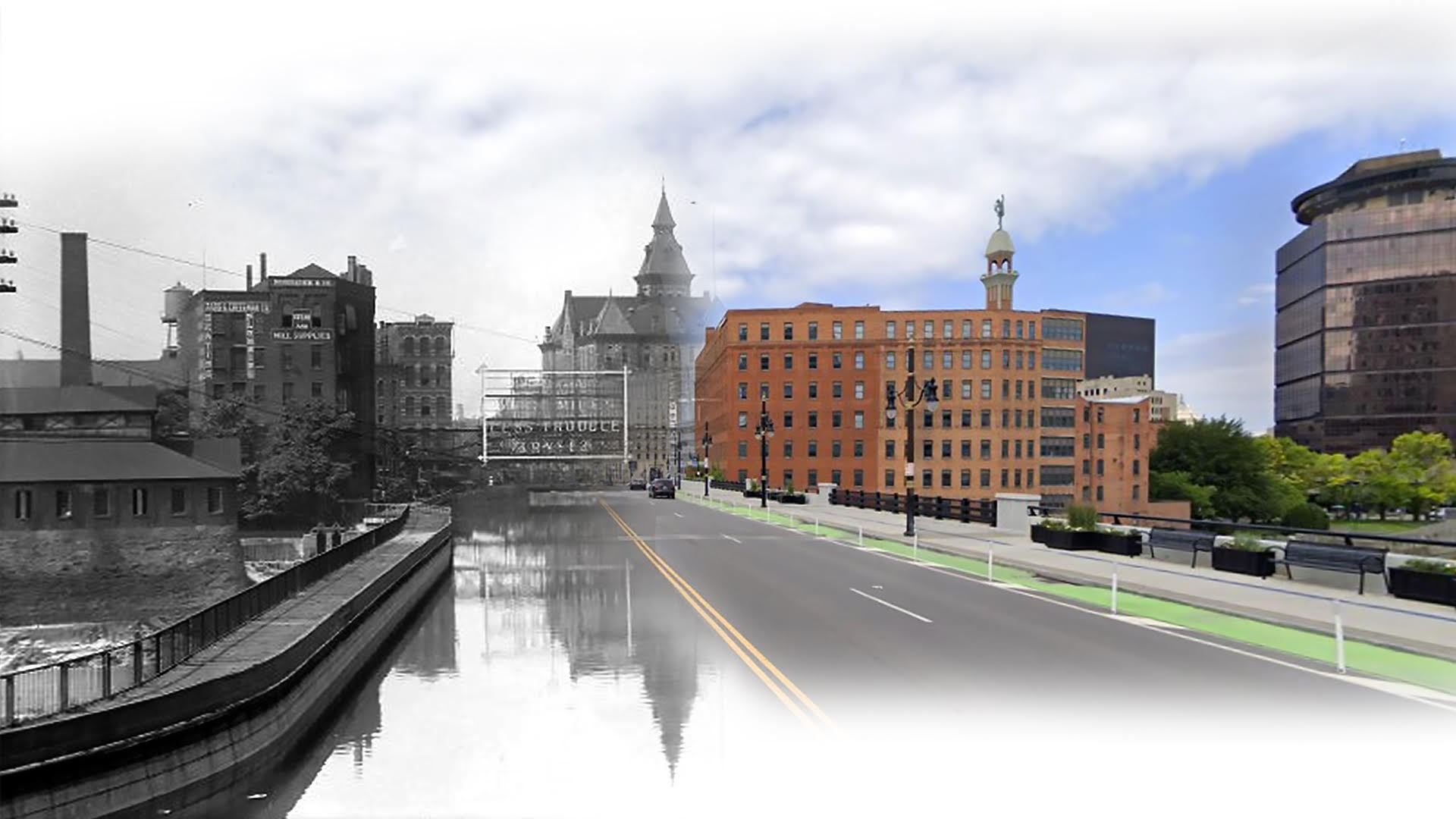
As the Erie Canal celebrates its 200th anniversary, the rich history of the Rochester aqueduct is once again in the spotlight. This iconic structure, which has undergone significant transformations over the years, embodies Rochester’s evolution. Originally constructed in 1842, the aqueduct served as a critical link for the Erie Canal for 75 years. This impressive 800-foot-long, 70-foot-wide structure, now recognized on the National Register of Historic Places, initially carried canal boats, powered by horses and mules, over the Genesee River.
In the 1860s, shipping on the Erie Canal began its transformation from small animal-powered boats to larger vessels powered by steam engines. A major shift occurred in 1918 when the canal was widened and moved approximately three miles south of central Rochester, where it now intersects the Genesee River at Genesee Valley Park. The construction of the Court Street Dam just upstream from the Rochester aqueduct was pivotal. The dam raised and regulated the river’s water level to match that of the rerouted canal, making an aqueduct unnecessary.
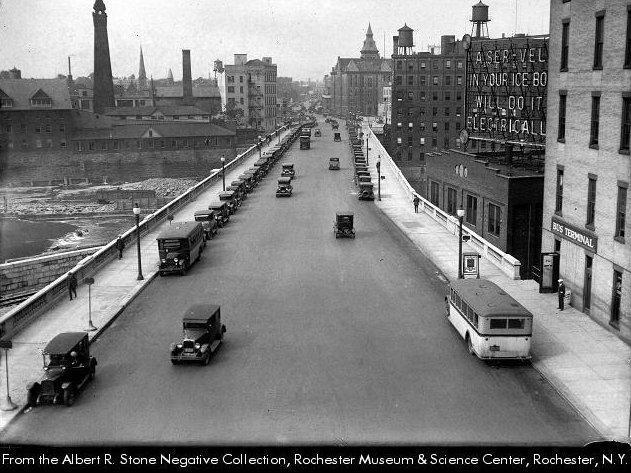
In the 1920s, the historic aqueduct was reborn as a critical part of Rochester’s new subway system. A roadbed was added above the aqueduct to accommodate automobiles, while tracks were installed directly on the former canal bed to carry subway riders over the river. The subway served the Rochester community for three decades, until 1956.
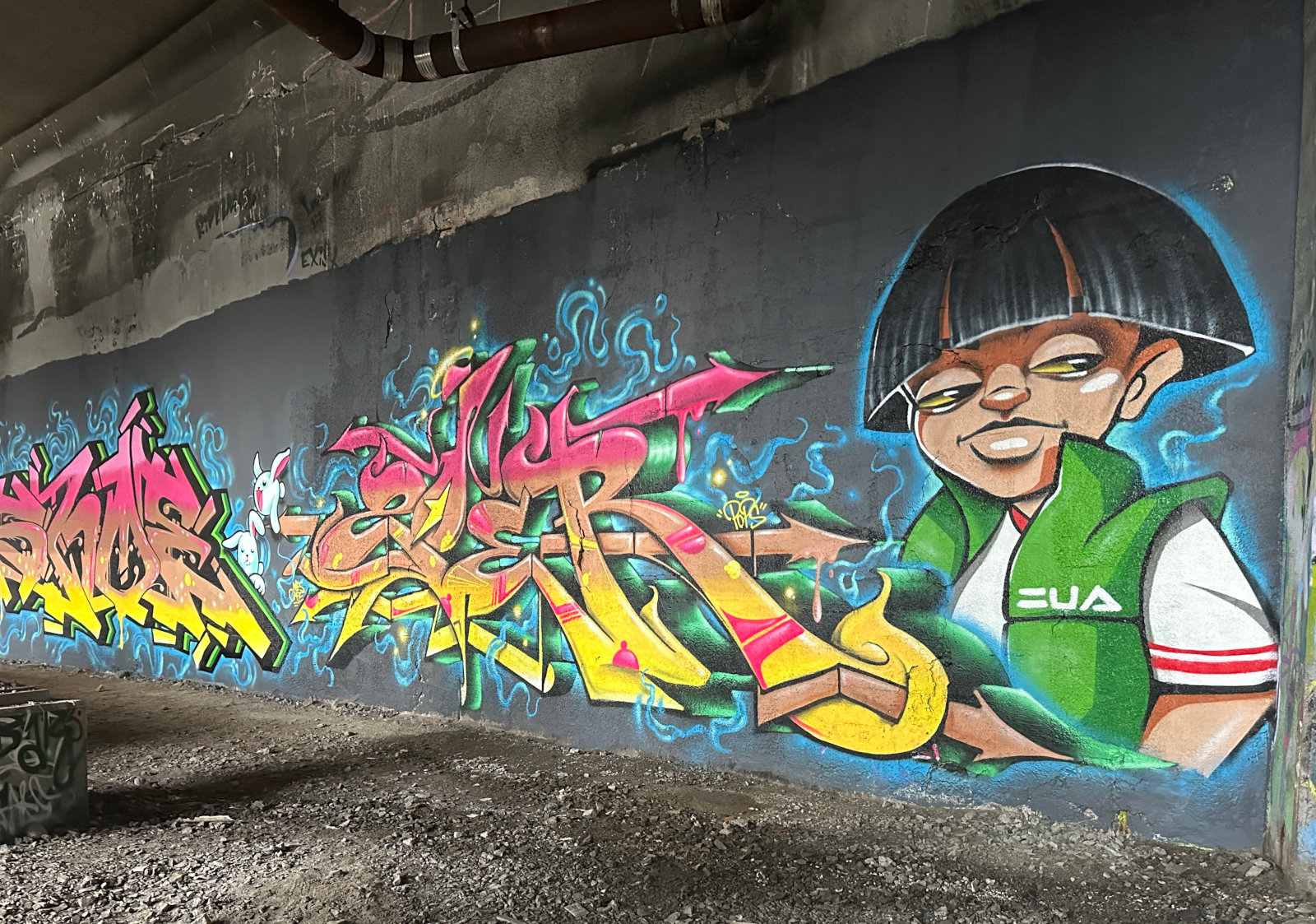
Today, Rochester’s aqueduct is embellished with a large collection of murals and graffiti art, accessible through occasional guided tours, while the aqueduct’s future continues to be the subject of creative planning efforts. As the centerpiece of the “ROC the Riverway” initiative, the Aqueduct Reimagined project plans to revitalize the historic Erie Canal Aqueduct and adjacent riverfront promenades, to create a vibrant public space that uniquely celebrates the rich history and culture of Rochester, New York.
For those interested in exploring the early days of the original the Erie Canal in downtown Rochester, the Tour Blend App features a two-mile walking tour titled “Walk on the Old Erie Canal.” Beginning above the Aqueduct on the Rundel Library Terrace, the tour is narrated by Brenda Tremblay, Classical Morning Host at WXXI. It features captivating geo-located historical images from the Rochester Public Library’s Local History & Genealogy Division and the renowned Albert R. Stone Negative Collection at the Rochester Museum & Science Center. The tour was developed with help from the Office of the City Historian and the Rochester Public Library.
 Tour Blend